
Insight:

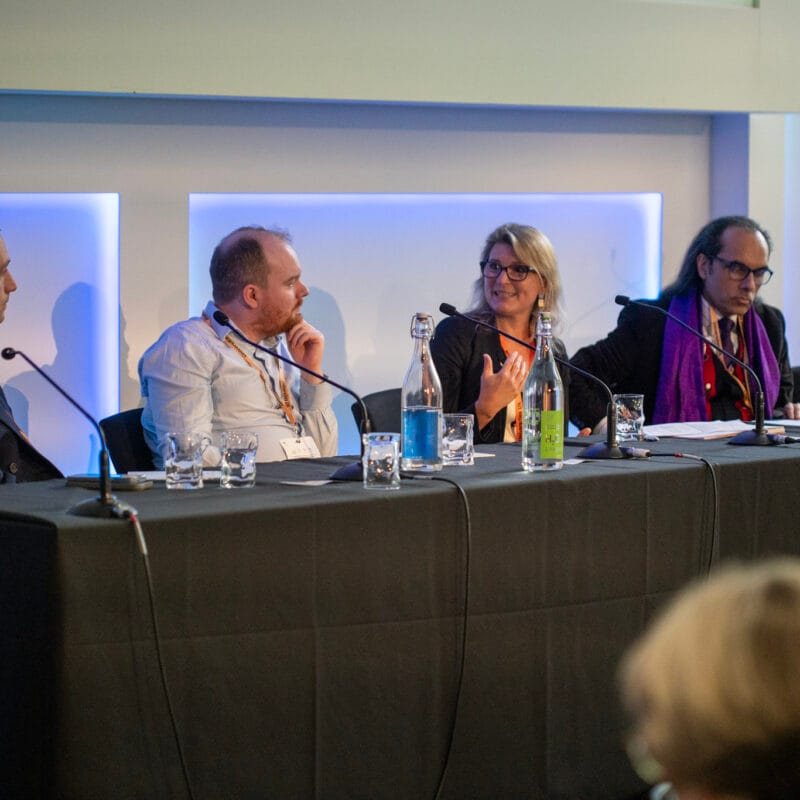
This June, Principle’s Joint CEO Jane Cox attended Universities UK’s annual ‘Political Affairs in Higher Education’ 2026 conference. Jane took part in an expert panel to discuss how organisations can engage effectively with policymakers and navigate the changing political environment strategically.
Political engagement has many strands, but across Jane’s 20 years of working in policy and public affairs there are three key things that always ring true:
MPs are and have always been deeply interested in their constituencies and how they can support good local initiatives and activity. Now there’s no longer such a thing as a ‘safe seat’ for any party, whatever their political colour. MPs have become more invested and tuned in to their constituents’ wants and needs as they must prove to be positive local advocates if they hope to keep their seat at the next election.
To tactically leverage this, organisations should find local strands to their national political campaigns, for example by working with local champions, finding local case studies and highlighting local data and impact. Last year, Principle worked with Health Equals to develop a hyper-local data strand to their wider public affairs activity, showing MPs the areas with the highest and lowest life expectancies within their constituencies. This hyper-local data brought to life the extent of the health inequalities within the communities they serve, generating increased support for the campaign from a broader range of MPs.
2. Quality engagement with MPs over quantity
Find interesting ways to engage the key MPs that you want to develop relationships with, such as visits to services or facilitating meetings with constituents who care about the issue. A few memorable meetings or visits with the right people often has a far greater impact than a mass mailing or untargeted meetings with lots of MPs.
To do this, spend time mapping stakeholders – where power lies on your issue, where you have potential advocates and influencers, who might be supportive due to local or personal interests and experiences – and plan engagement from there. When you have a positive relationship with a parliamentarian, ask for their advice and thoughts on your campaign – they will often have ideas you hadn’t thought of, or helpful contacts you weren’t aware of.
At the conference, Jane gave the example of Principle’s recent work with the Sickle Cell Society, where one MP who visited their local pilot Sickle Cell Emergency Department Bypass Unit became a brilliant champion of the approach. He subsequently secured an invitation for the Sickle Cell Society to give evidence on the pilot to the Health and Social Care Select Committee and raised the issue in Health and Social Care Oral Questions, helping to secure an extension of funding for this vital pilot scheme.
3. There is power in partnerships: A collective sector voice on an issue is far more likely to achieve cut-through
MPs are busy, with thousands of enquiries and issues often coming at once, so to stand out on big national issues, joining forces with others campaigning on your issue can help cut out the noise and put clear and concise ask in front of MPs. They’re more likely to listen to the voice of 5 organisations working together than try to pick from different messages and voices of 5 organisations saying similar but slightly different things. Even better, 50 organisations coming from different sectors but aligned on the change they want to see. Partnership work takes time and trust but is worth it.
A brilliant example of this is the Less Survivable Cancers Taskforce – a group of cancer charities that joined forces to increase survivability of the less survivable cancers. As a result of their collective efforts, the need for focused action to address these overlooked cancers has been recognised in the recent Cancer Plan for England and in the Cancer Strategy for Scotland.
There is so much more to creating a brilliant public affairs/political strategy: having a clear vision and defining clear policy asks; building your evidence and communicating it in an engaging, compelling way; being tenacious (remember the marketing rule of thumb – people need to see your messaging 7 times before they take action); creating moments to be heard and being ready for windows of opportunity that arise… The list goes on!
If you’re like support with your political engagement, get in touch today.


Principle Consulting (trading name) is the same company as Principle Affairs Ltd, company number 05467588 (full details available on Companies House).
Privacy Policy